
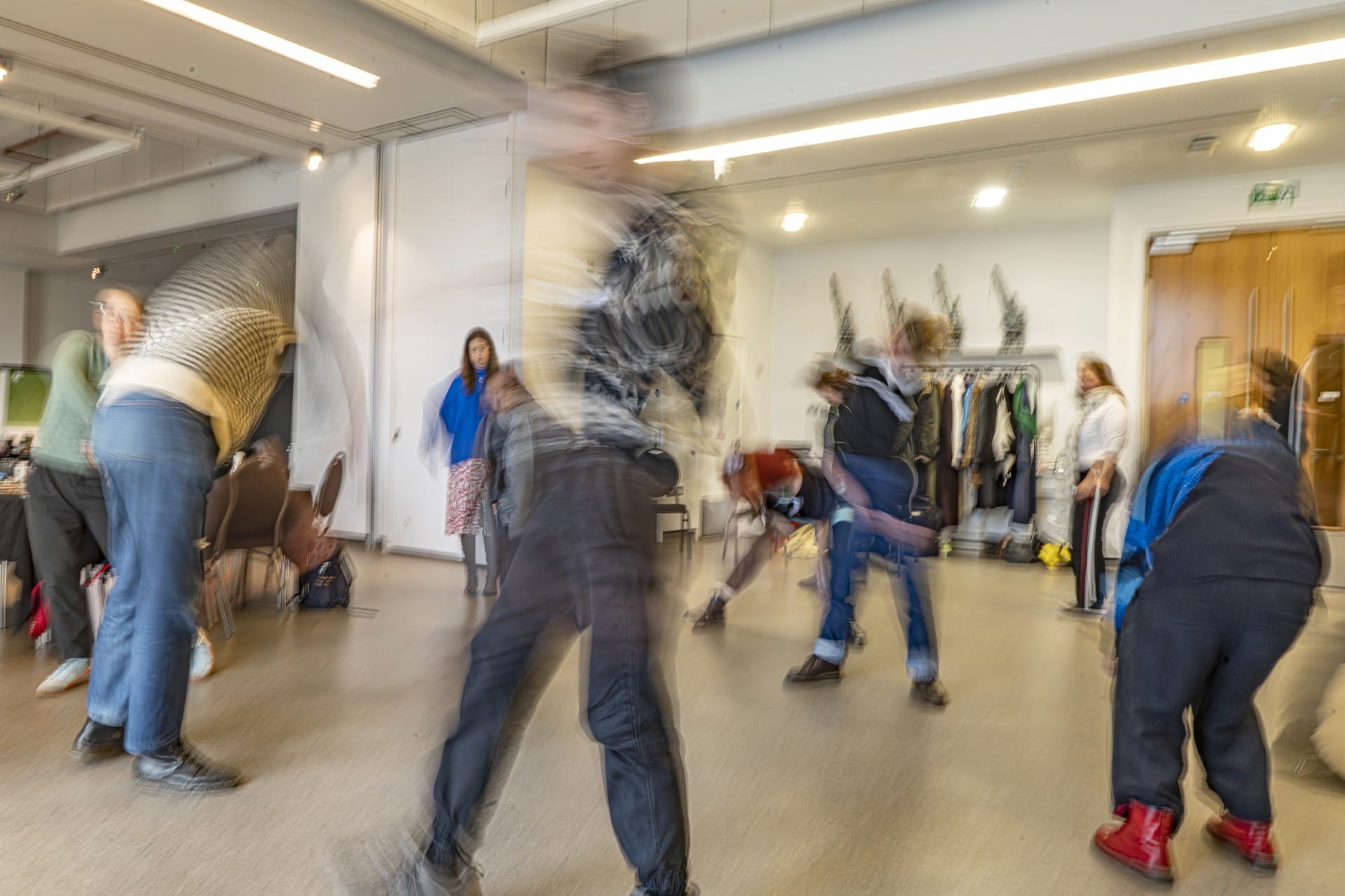
An article written by Executive Committee member Sally Lewis, following a Museum Development South West networking event held at Bristol’s M Shed on the 26th January 2026
Last month was my final networking session as a champion for the South West Growing Together project, a face to face event at Bristol’s M Shed on working with dance, museums and collections for equity, diversity, inclusion and belonging (EDIB). I was lucky to have enthusiastic Museum Development South West facilitators, two knowledgeable fellow speakers and creative and generous participants.
Activities could have filled a day, but as this was an extended morning session we had to move on quickly, although people made the most of networking opportunities. We had three talks, a sharing of participants’ case studies and look through the Bristol People gallery for ideas with a linked dance session following later on.
Case studies – Dance & Museums for Equity, Diversity, Inclusion & Belonging – Range and Impact
I illustrated my talk with case studies, the first of which was ‘Machine’ from Museum of Bath at Work and Trinity Laban students for Museums at Night (2011). Although largely created remotely, the students were able to use the sound of the working machinery in the museum and a range of movements reflecting the collection. This started Julian Lewis’ and my collaborative journey, bridging our sectors to advocate for more dance in museums.
As part of a Developing Your Creative Practice project funded by Arts Council England I looked at a number of dance/museum case studies in order to create an evaluation framework for this kind of project. I described several of these examples, to show the way they support all kinds of EDIB work. For example, as well as providing opportunities to work with different community groups and audiences and improving health and wellbeing, they also enable different forms of engagement with collections, improving relevance and access. My talk ended with a short video of highlights from case studies (thanks to Katie Green & The Imagination Museum).
Community Dance & Heritage for Equity, Diversity, Inclusion & Belonging – A Dancer’s perspective
Julian Lewis (dance artist and teacher) added more case studies and evidence of EDIB impact in his talk, with particular focus on community projects and work with young people, from his experience working with dance organisations, museums and community groups. This included an individual performance piece reflecting natural heritage (JACK DEFROST, Traceworks Dance) performed in a variety of community settings, and the ‘Object in Focus’ project (Trinity Laban/Horniman Museum & Gardens) with an individual collection item displayed in a dance setting.
Dance, Heritage & Activism
Rosa Cisneros (dancer, choreographer & curator) used her own Roma heritage and personal experience of barriers to put the dancer in a cultural heritage context, and using dance with archives as activism to bring about change. Rosa started a film production company to create dance films and documentaries that capture stories and reflect embodied traditions that might otherwise be lost. This was illustrated by the background to ‘Tears in a Cup’, a film commissioned by the Dig Where You Stand Project in Sheffield. It memorialises what were two unknown women mentioned in the archive bringing together different heritage aspects, tangible and intangible in a graveyard setting. The reaction difficult to convey in words, Rosa’s story and the final film were profoundly moving for the audience.
Sharing
There was also the opportunity for participants to share their own experience of dance and museums in the South West or to share a case study. Several people did this, adding to the richness of the discussion, and these will in time be added to the bank of case studies hosted by the The Imagination Museum (link below).
The Dance in the Museum Workshop
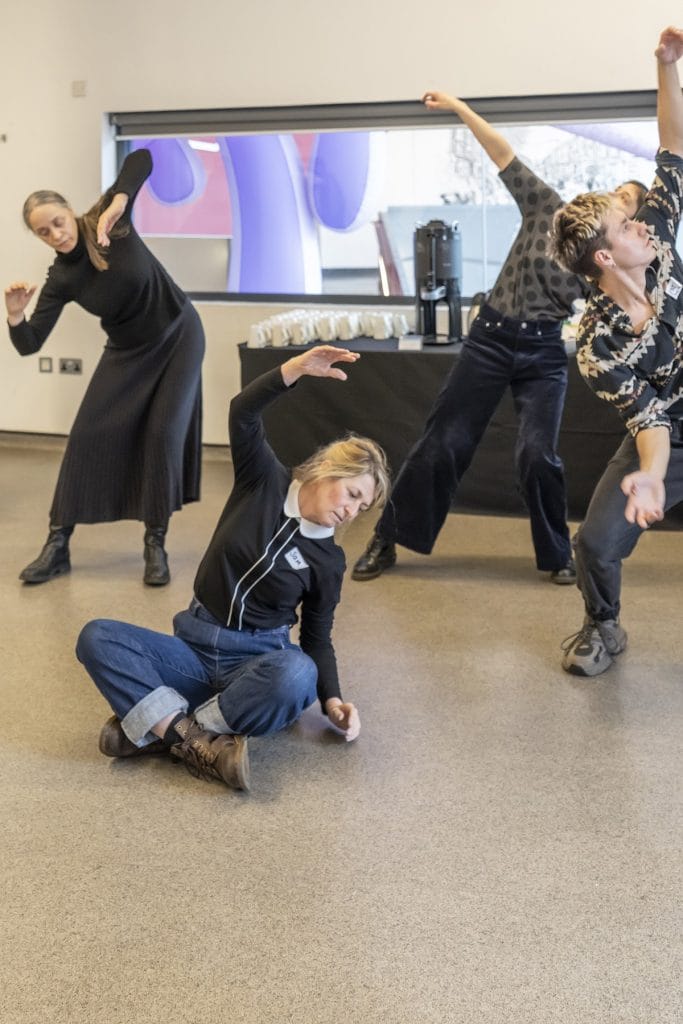
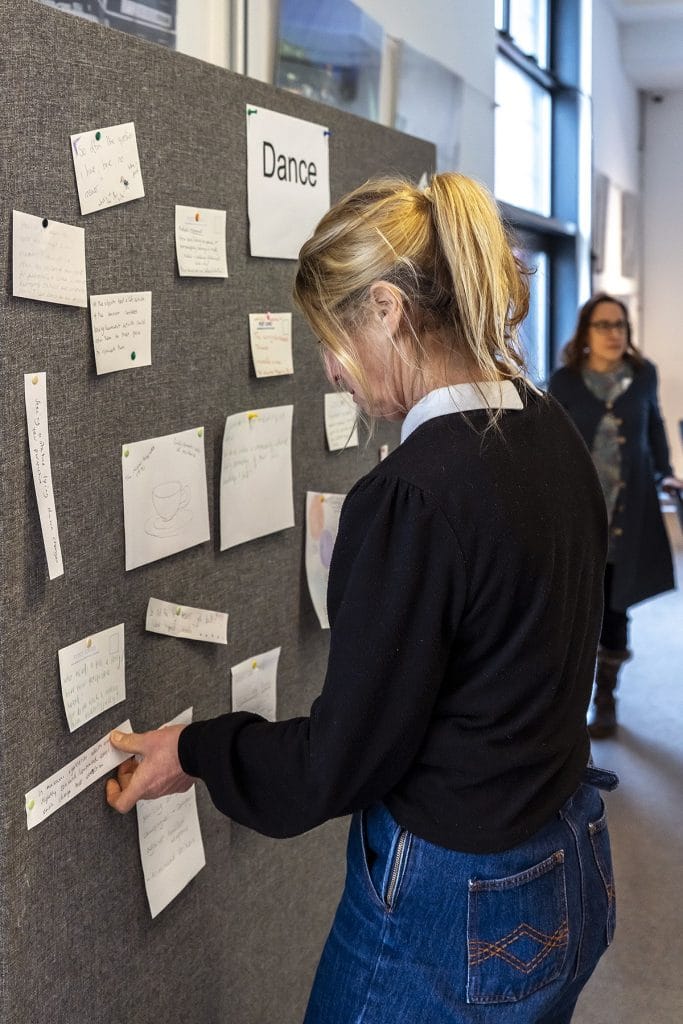
The final part of the day was movement! In the short time available, Julian had looked over the creative impressions and ideas (words, phrases, sketches), shared after the Bristol People gallery visit. Using these as input, he facilitated a short dance workshop structured as a gentle warm-up, improvisation and taught phrase which everyone (regardless of their dance background), could take part in.
Julian skilfully established a safe and supportive environment for physical sharing. He guided participants through both individual and group explorations of the space, helping them to engage with the array of ideas shared earlier.
Central to the workshop were the motifs of resistance, pressure, and tension, which served as threads connecting the movement exercises to themes emerging from the gallery and its exhibits. These motifs allowed for both personal interpretation and collective interaction, deepening the group’s engagement with the gallery and its objects.
As well as the benefits of a group co-creation, the workshop illustrated the value of dance in expressing things we can’t always put into words. It also shows how the creative input of a skilled dance artist can add numerous layers of understanding and enrichment to our collections.
Final thoughts
The session reinforced the understanding that dance and museum collaboration is a great way to reach a new audience, and think about collections in different ways
It is particularly supportive in helping with equity, diversity, inclusion, belonging, social justice and activism
If you are new to the work, there are lots of case studies, other resources and people to talk to for advice and inspiration
We need to maintain the momentum and advocacy of the last 10 years in our cross-sector working
I’d also like to add that if you are thinking of commissioning artists, do consider dance artists. Mention dance in your call out and be open to movement and dance performance output, which can also be linked to tangible aspects like exhibitions and resources. Funding can enforce short deadlines, but bear in mind the care needed to put together an idea and benefits of long-term collaboration.
If you would like to get in touch please comment or message Sally on LinkedIn and to join The Imagination Museum network sign up here Join in – The Imagination Museum.
The Growing Together project by Museum Development South West has been made possible thanks to a grant from National Lottery Heritage Fund and funding from Arts Council England.
Thank you to Clare Ferdinando, Eleanor Moore and Julie Taylor Kent for support throughout and facilitation. Thank you to Julian Lewis and Rosa Cisneros for talks and Julian for the dance workshop. Thank you to Katie Green and The Imagination Museum and Rosa Cisneros for sharing their videos. And everyone who came for your participation, sharing and posting of positive comments.
Links
Growing Together project Growing Together – Museum Development South West
Bristol People | Bristol Museums
Sally Lewis (5) Sally Lewis | LinkedIn
Dance & Museums facebook page (1) Facebook
Julian Lewis Instagram
JACK DEFROST — Traceworks Dance
Object in Focus – Horniman Museum and Gardens
Tears in a Cup, commissioned by Dig Where you Stand Project, supported by University of Sheffield’s Centre for Equity & Inclusion & Sheffield City Archive https://youtu.be/q64j2NvsZxw
Case Studies – The Imagination Museum
Threat to contemporary dance heritage Memory in motion: mapping Europe’s hidden dance heritage | Horizon Magazine
Photos: Museum Development South West/Amanda Harman