
by Katie Green (Imagination Museum Strategic Lead)
Earlier this year, I was inspired by an article from Holly Payton-Lombardo, outgoing Director of the National Rural Touring Forum, about the power of networks.
Power and Advocacy Within Networks by Holly Payton-Lombardo
In this article, Payton-Lombardo describes the need for the sector to “resist isolation and competition” and instead to “double down on collaboration: “We should all be looking to share our learning, link efforts and build alliances across artform, geography and scale.”
A valuable network
The Imagination Museum was founded with exactly these aims in mind – sharing learning around using dance in response to museums and heritage sites, promoting opportunities for individuals and organisations to share practice, creating a space for discussion, exchange, inspiration and development of new ideas.
By making the processes involved in bringing about dance/heritage collaboration more transparent, encouraging people to share their learning, we wanted to make it more possible for more of this work to happen, and for it to be of a higher quality, informed by the experience of people who had tried things out before.
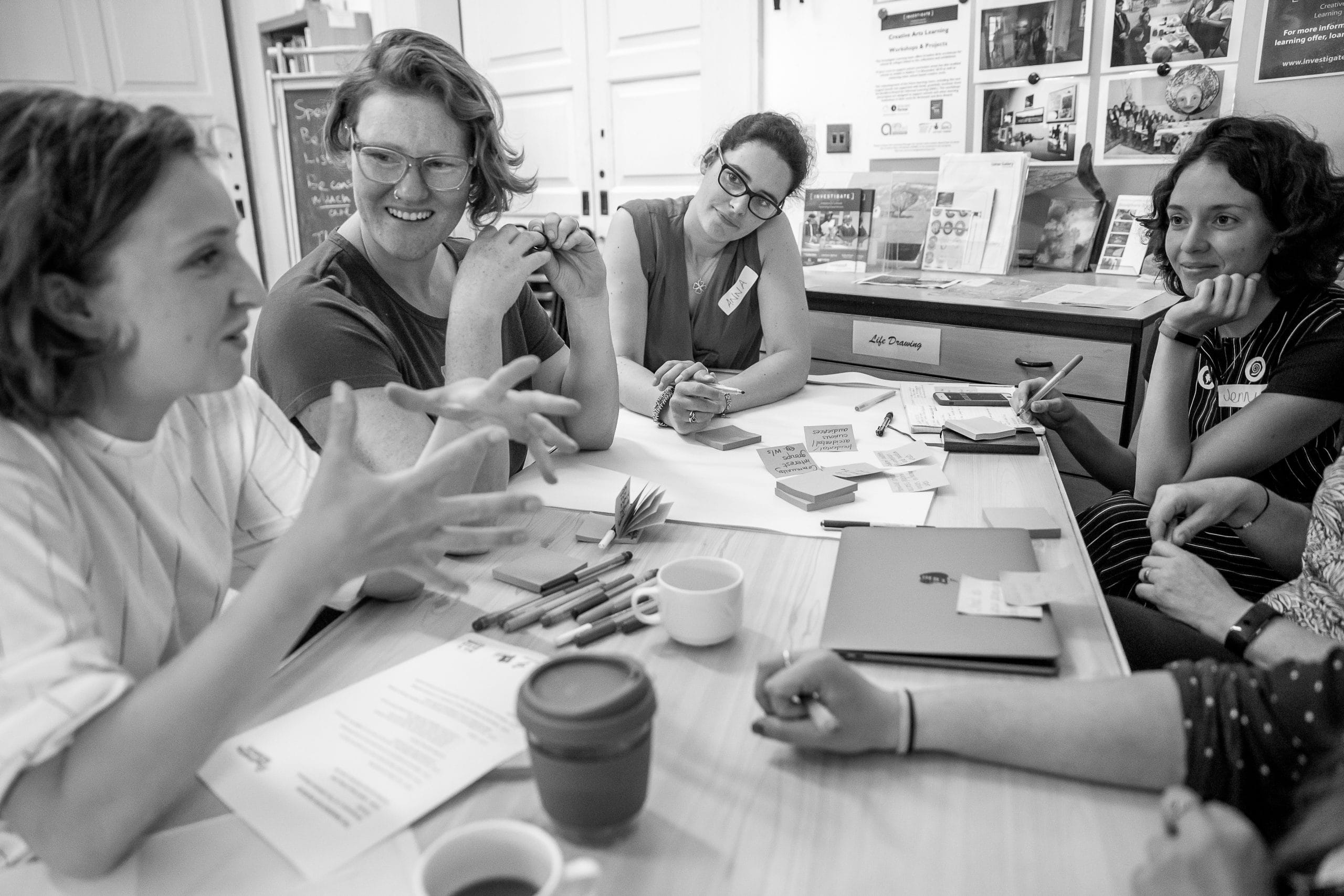
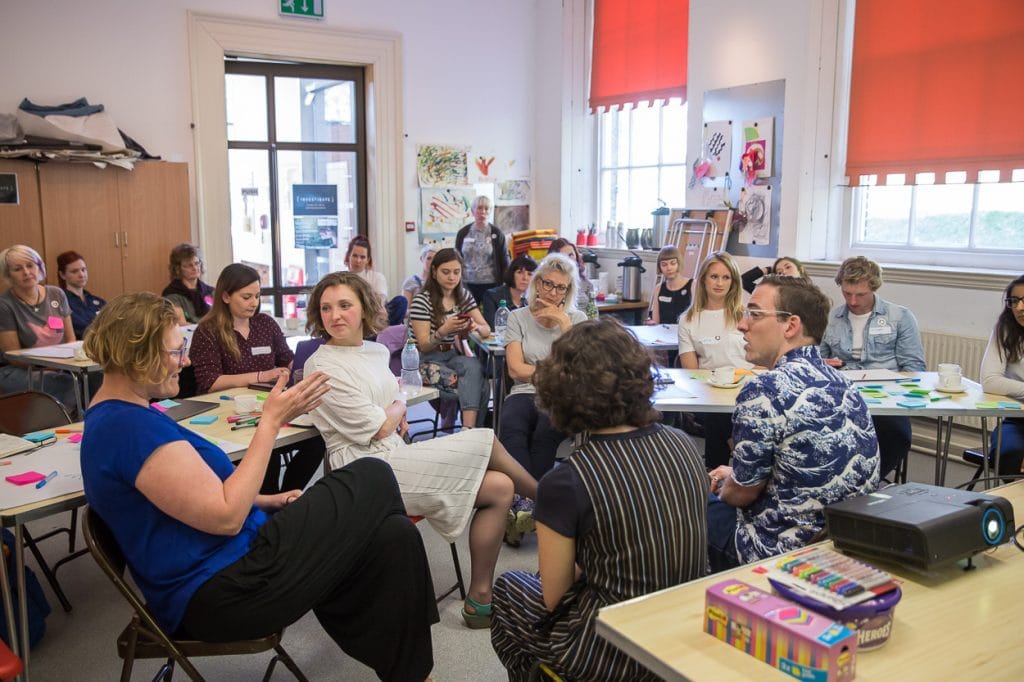
One of the most heartening things we discovered from the Arts Council funded activity The Imagination Museum was able to undertake in 2024 (during which we had the opportunity to hold in-person events) was the value and strength people drew from the act of coming together; being inspired by each other’s practice.

Organisations were challenged to think in new ways about collaboration, sometimes finding it easier to move forward with new ideas because they were inspired by the Imagination Museum network as an external organisation.
The network is good at pushing people a bit further, can provide a bit of hand-holding to push people’s work/projects further, strengthens the overall infrastructure.
Partner feedback, 2024
Individuals gained knowledge, inspiration and tips, and in 2024, 100% of participants at our events said they made new connections as a result of attending and 70% stating they had made more than 3 connections.
The projects we heard about during 2024 showed time and again the ways in which dance/heritage collaborations (most often also integrating collaboration with local communities) had power to
- tell stories in dynamic ways that help people consider their history and their heritage in new ways, often on a more personal level.
- bring playfulness and joy, and challenge the more traditional ways that things have been done in the past.
- to enable visitors, audiences, participants and makers to engage with museums and heritage sites in a tactile, experiential, multisensory way, engaging new audiences (as well as appealing to existing audiences).
- facilitate trust-building with local communities and partners, inspiring them to develop a deeper relationship with their local heritage.
Theses and more opportunities are outlined in our new Essential Read resource
Essential Read: First steps for working with dance in museums and heritage sites
Our current position
We know from our members that The Imagination Museum has a valuable role to play in the development of a stronger, more collaborative dance/heritage sector.
brilliant, energising and important conversations, networking, inspiration and encouragement!
Participant feedback 2024
However, in spite of the initial momentum behind the idea of the Imagination Museum network since 2018, when we first received funding for a pilot, it has been increasingly difficult to secure follow-on funding, with more unsuccessful applications than successful ones.
The process of making applications relies on a substantial contribution of voluntary time, and while we are not in receipt of core funding, our other communications and opportunities to network have had to slow down and stop to make space for this fundraising effort.
Bearing this in mind, we have been trying to draw out the parts of our offer we can sustain on a regular basis, even without funding, with some administrative support through Made By Katie Green (which is the current ‘managing organisation’ for The Imagination Museum). We want to try to maintain a state of readiness, so that we can pick up on other opportunities as they arise .
Positive next steps
The Imagination Museum will continue to curate a core offer for the network, keeping the door open for sharing of ideas, opportunities and expertise:
- Please feel that you can get in touch if you have questions about new projects or want help to take something further. You can do so by emailing our manager (at) imaginationmuseum.co.uk email address or contacting Katie Green on katie (a) madebykatiegreen.co.uk . If we don’t know the answer to your question we will always try to refer you to someone who does.
- You can find a great range of Case Studies online, as well as Resources.
- We have a New Resource that you can access for free if you provide your email address – our ‘Essential Read’ about ‘’First steps for working with dance and movement in museums and heritage sites.
Download our new Essential Read resource
Essential Read: First steps for working with dance in museums and heritage sites
- We plan to to reinstate our newsletter sharing new Case Studies, opportunities and events related to dance/heritage. We will aim to share these 3 times per year in the first instance, in February, June and October, adding into this where we have more to tell you. Do send us anything you would like us to include in this newsletter. We will also share a link to the newsletter on social media.
- In our About section of the website you can also read more transparent information about the consultation we can offer if you’re planning a dance/heritage collaboration.
For those of you who want to delve more deeply into the world of dance and museums, or who have specific questions, we also have:
- Information about participants at previous Imagination Museum events (gathered with participants’ permission). We don’t share this generally but if you’re looking for a connection in a particular area, we may be able to use this information to facilitate an introduction to the right person.
- Similarly, we have recordings of previous talks from our events in 2024 which have simply become impossible for us to edit to a high enough standard to share online given scarcity of time, but which we can share with individuals should you have an interest in our previous discussions.

A more fluid entity
Working with dance in museums and heritage sites teaches me endlessly about the importance of listening – to discover what a situation requires in response to the people involved in the project, rather than just forging ahead in the pursuit of a predetermined agenda.
For the time being at least, The Imagination Museum network needs to respond to situations as and when they arise rather than trying to plan for ‘Phase 1…Phase 2…Phase 3’ and so on. Although this is what I had originally hoped for – momentum that seemed tantalisingly close shortly before Covid hit – it has been hard to sustain.
Even when funding is scarce, and the challenges we face can seem endless, we can continue to look to and learn from each other, “resisting competition”, and “doubling down on collaboration.”
My longer term hope for The Imagination Museum is that one day it could also become a co-commissioning organisation, taking a more active role in the development of new dance/heritage projects alongside curious partners who are willing to try out new ideas. We are continuing to explore funding resubmissions and plans for this with current partners and we look forward to seeing where this takes us.
Photos throughout by Roswitha Chesher and Alice Odin